Aspat Yapı Akyarlar
RESIDENTIAL
2025
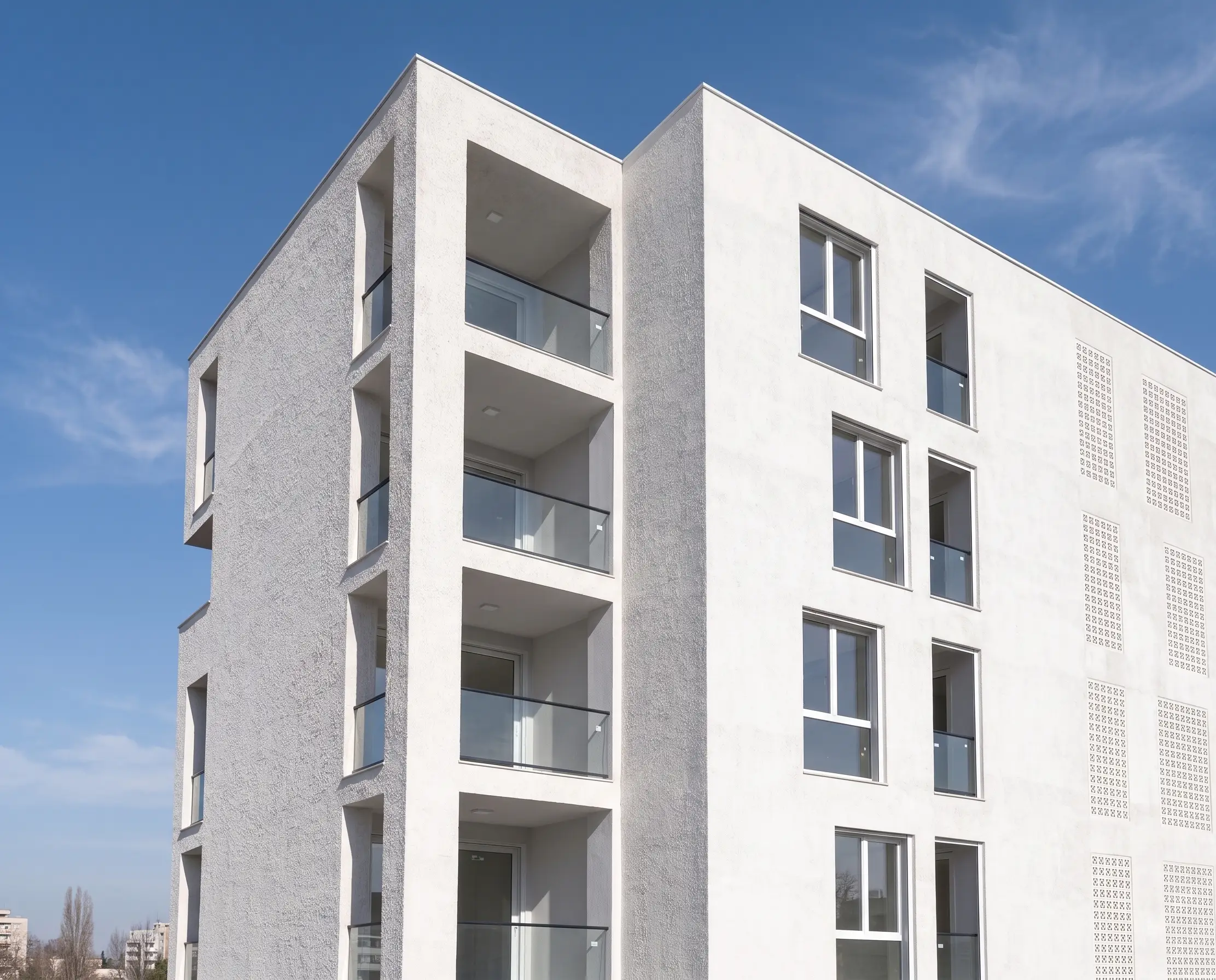
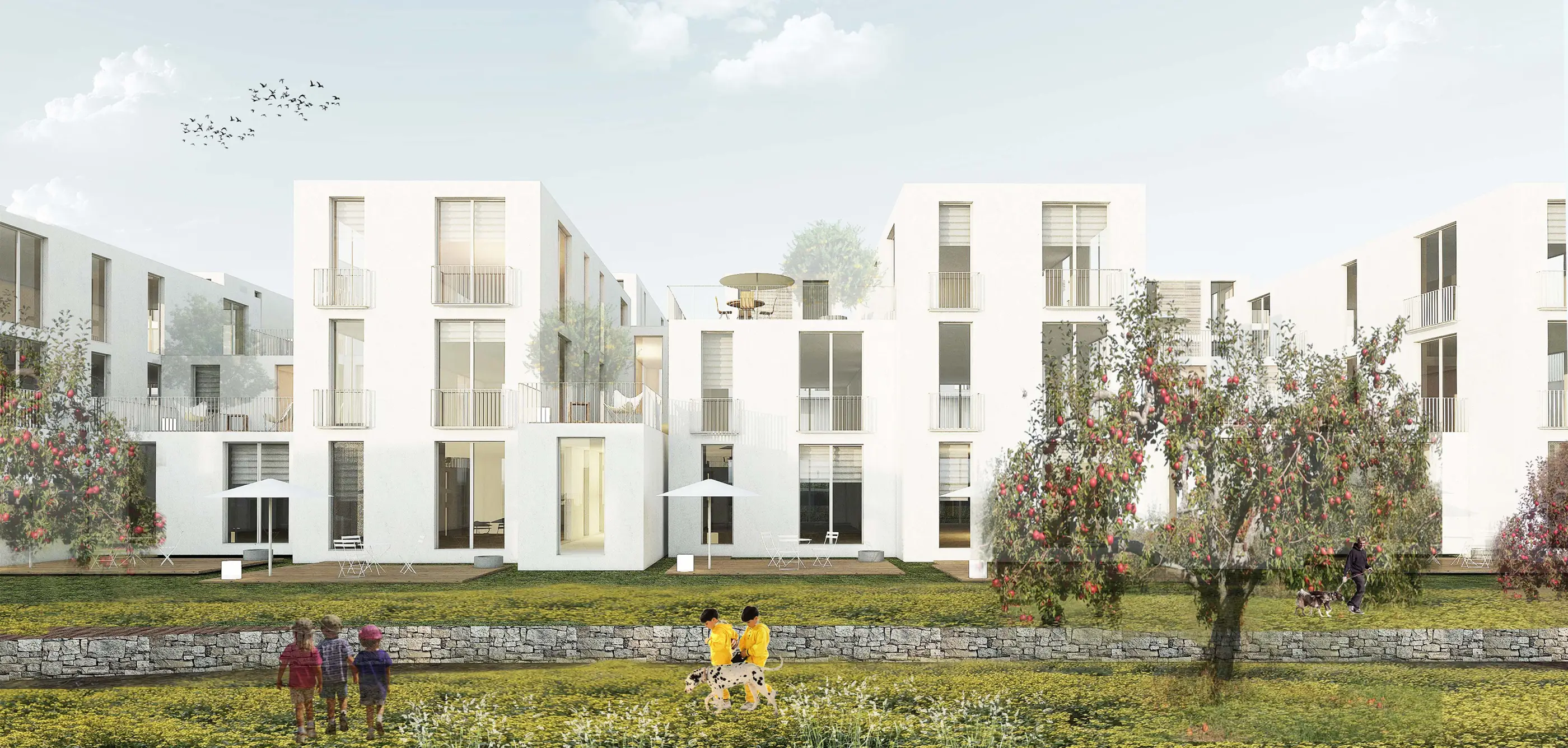
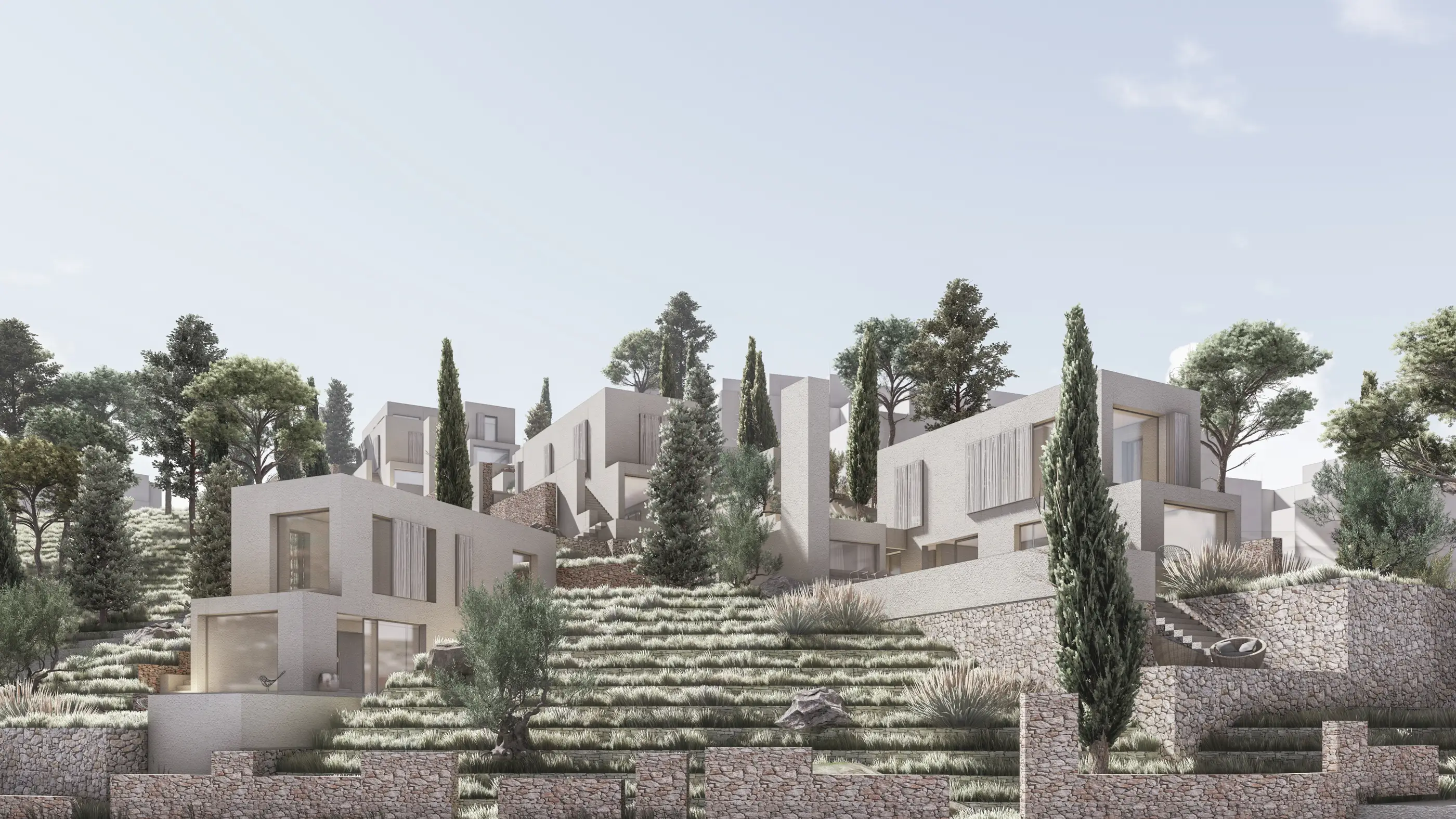
At the threshold where the city ends and the forest begins, a fragmented settlement that sits along the edges of the plot instead of in dense blocks, leaving a large shared landscape at its centre. With private gardens and plots set aside for growing food, nature becomes a layer to live in rather than just look at, while modular homes with terraces following the slope give each house its own outdoor space.
Location
Alemdağ, İstanbul
Year
2017
Program
RESIDENTIAL

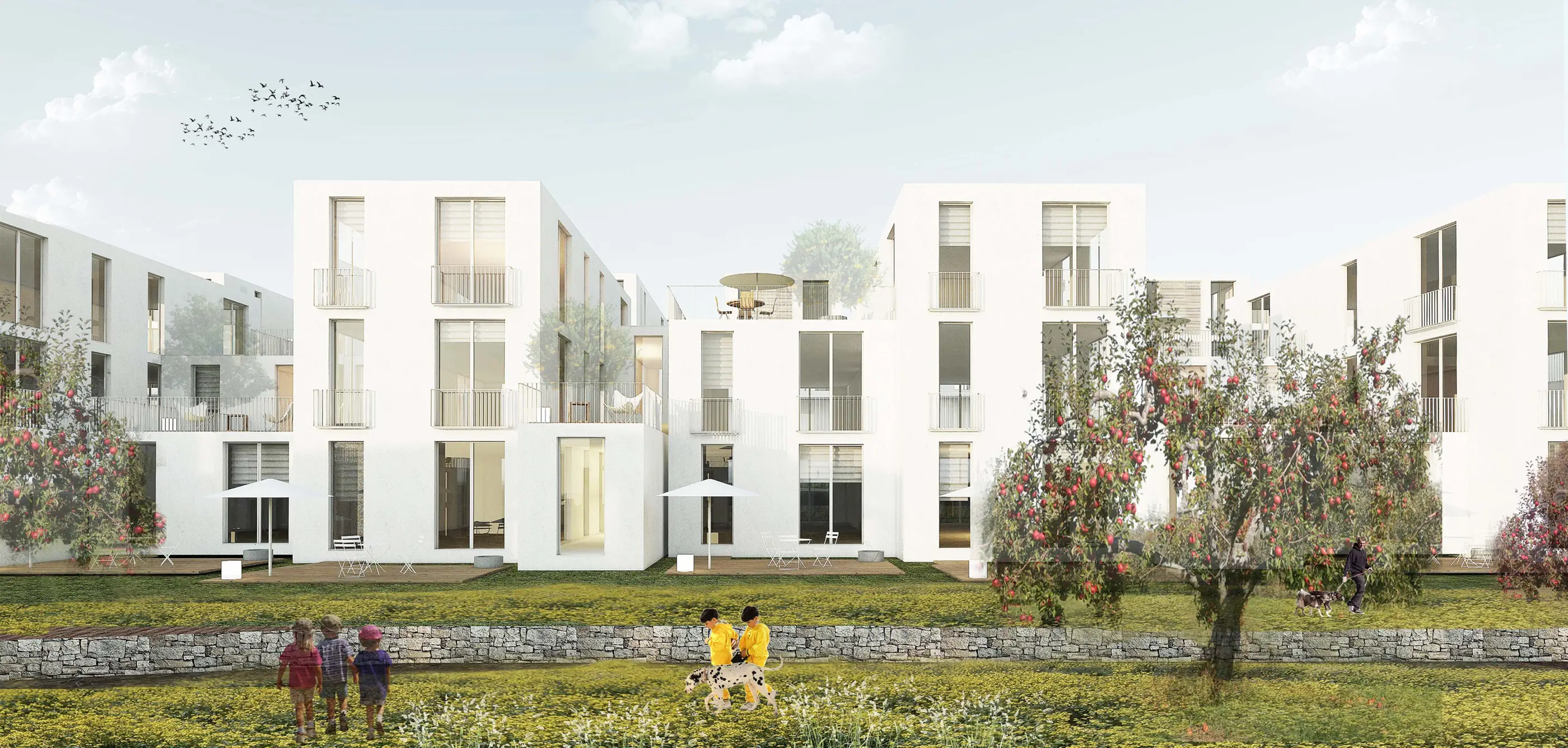
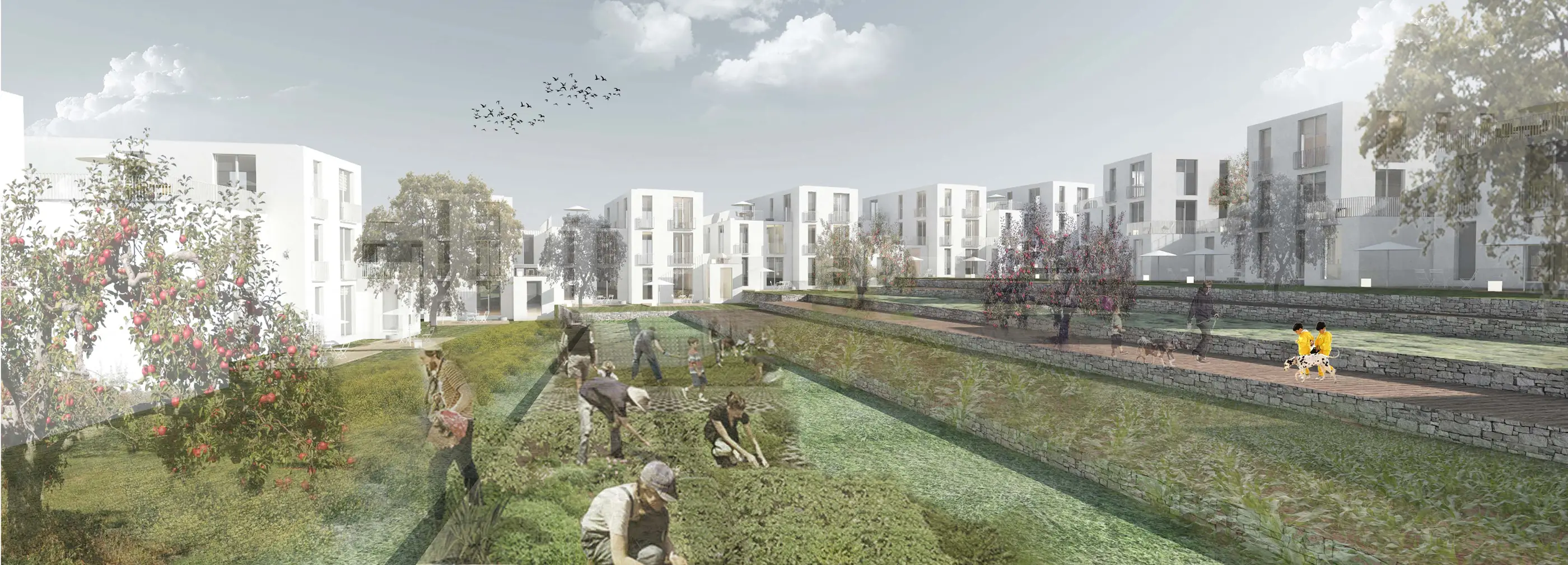

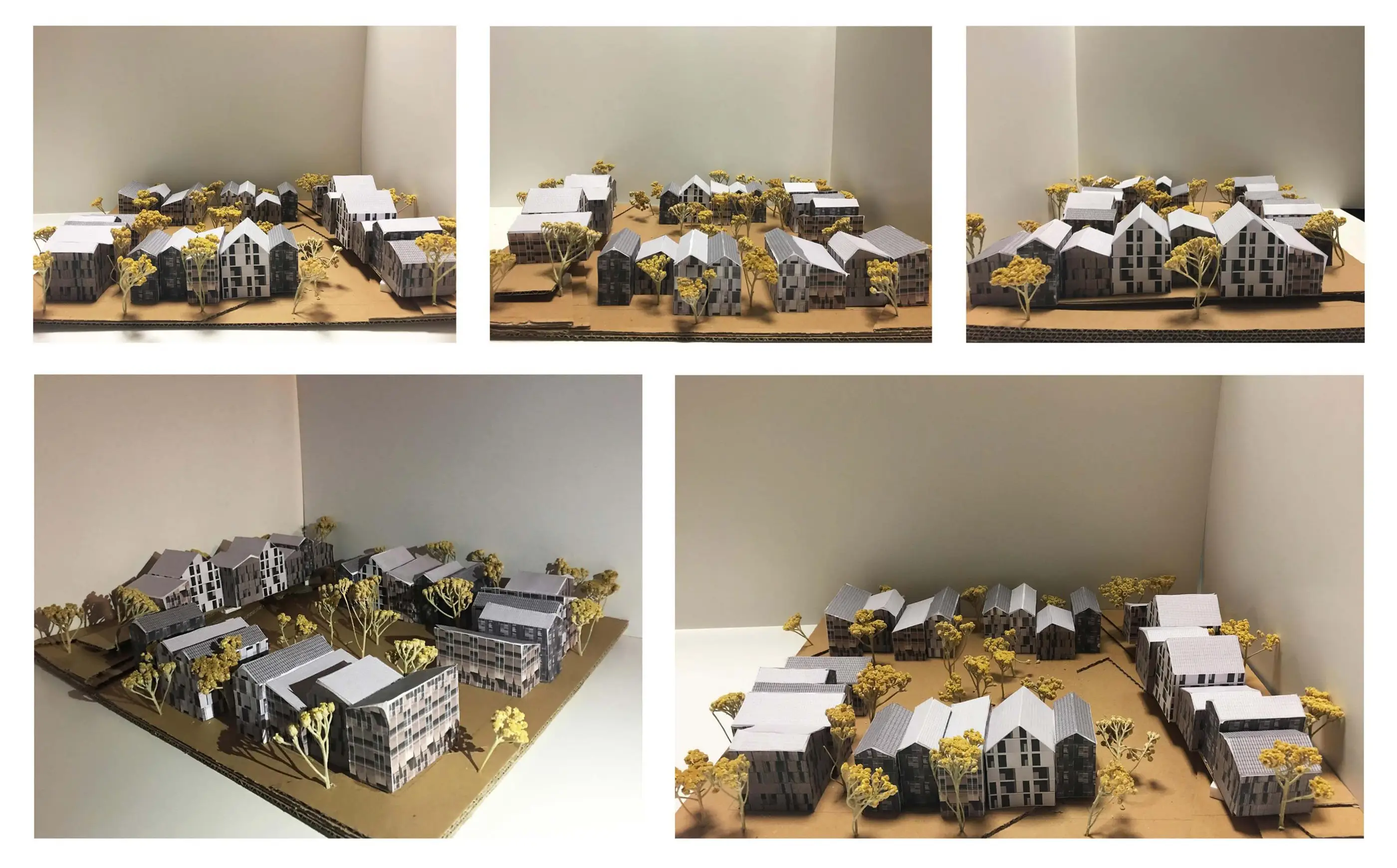
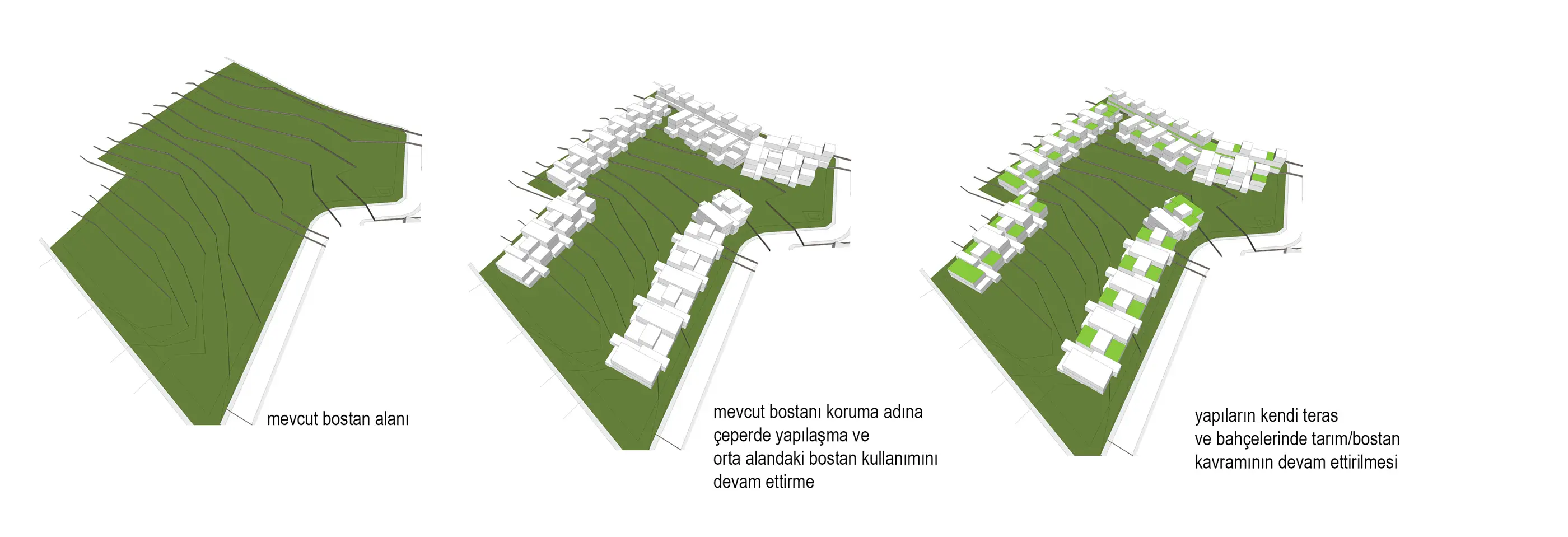
The Alemdağ project sits at the threshold where urban development ends and the forest begins. The design treats this edge not just as a physical condition, but as an opportunity for daily life to reconnect with nature. Instead of dense, closed residential blocks, it proposes a fragmented settlement that comes close to the ground, multiplies with gardens and merges with open space.
Placing the buildings along the edges of the plot leaves a large, continuous landscape at the centre. This centre is not a secondary garden left over around the homes, but the main spatial spine that carries the shared life of the settlement, its growing areas and everyday encounters. The buildings along the edge face the centre, so every home has a direct visual and physical connection with open space.
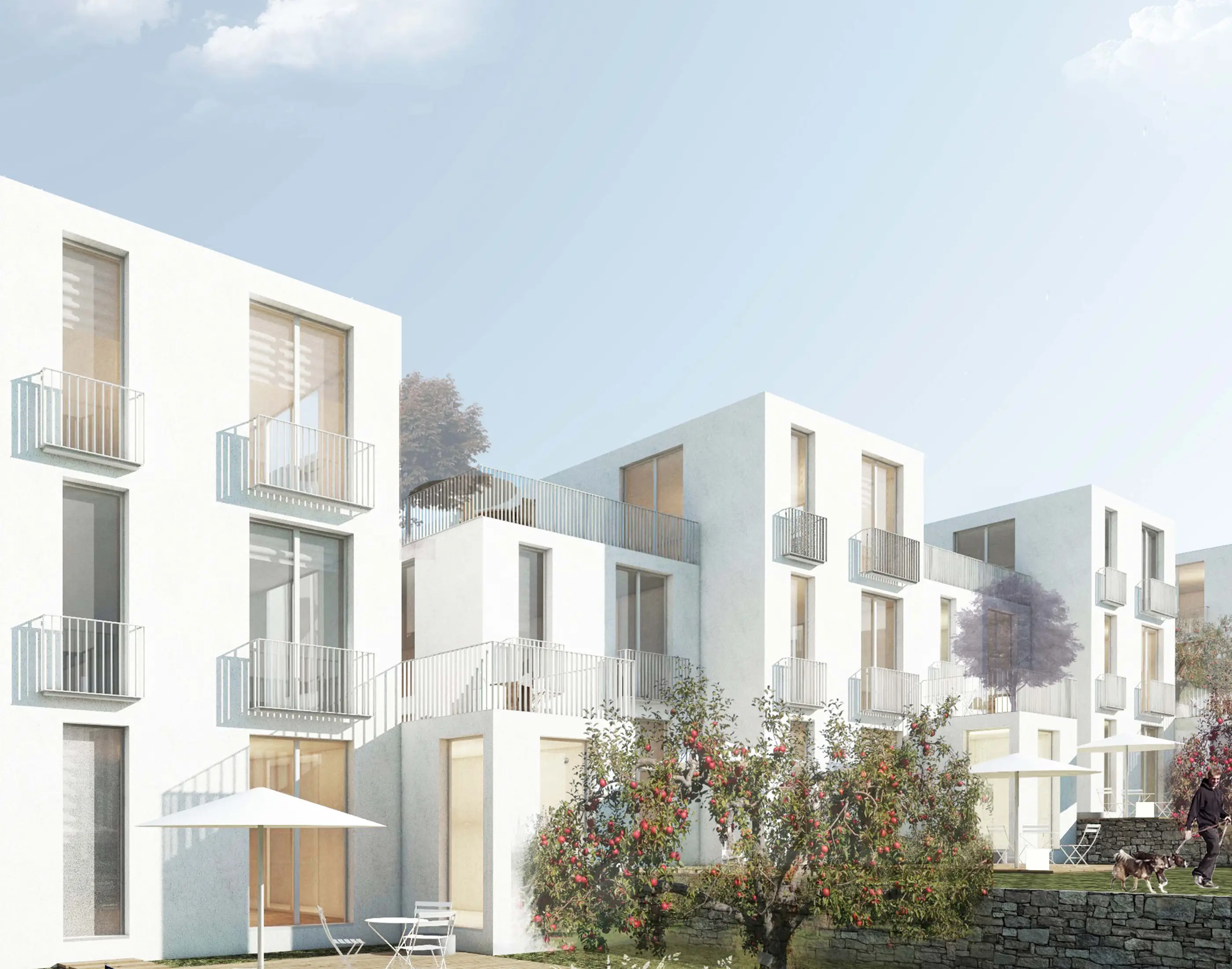
Different housing types come together in a modular system that follows the slope. Instead of being stacked, the volumes are broken up by setbacks, level changes and terraces. This reduces the scale of the settlement and gives every home a garden, terrace or outdoor living area. The varied types diversify within the same architectural system, creating a residential fabric that is coherent without being monotonous.
The project’s landscape approach treats nature not as a backdrop to look at, but as an active part of life. Shared green spaces, private gardens and plots for growing food spread across the different layers of the settlement. The result is a living environment where residents relate directly to soil, plants and the changing seasons, and where children experience nature as part of everyday life.
Other work by Baraka at a similar scale and program.